

Corruption affects us all. It threatens sustainable economic development, ethical values and justice it destabilises our society and endangers the rule of law. Delays in infrastructure development, poor building quality and layers of additional costs are all consequences of corruption.
If the corruption continous and gets worst the future generation will suffer.
The Philippine labor market suffers from a lack of quality jobs, which means “most of the poor are working poor”, as low-paying jobs of underemployment prevent them from graduating out of poverty,
Some households, the report cites as an example, earn as little as P50 to P100 a day, and many urban poor are “trapped in a low-wage and low-productivity jobs in the informal sector. The 4Ps program, which is estimated to have contributed about 25 percent of the decline in poverty, extends monthly cash grants to the poorest of the poor families in exchange for the recipient families’ commitments to keep young children in school and for mothers to submit to regular health checkups. BUT THE QUESTION IS, 4P’S ENOUGH? HOW SURE THE GOVERMENT IS ONLY THE POOREST HAS GIVEN THIS KIND OF OPPORTUNITY? families only get the cash if their children go to school and get regular health checkups. Maybe some people don’t understand what kind of money we are talking about. It is not actually very much, and it is definitely not enough to make people kick back, stop working, and enjoy the good life. In other words, poor people are becoming less poor, but they are not becoming non-poor. This has a lot to do with the fact that the value of the benefit hasn’t changed since the program started in 2008. Inflation has made the grants worth a lot less today than they were then.

WANT TO KNOW MORE ABOUT POVERTY? I’LL SHOW YOU SOME TYPES FIRST IS THE Generational Poverty a family having lived in poverty for at least two generations, attitude is the main factor in being able to distinguish whether someone is from generational or situational poverty. If the individual or family feels that society owes them a living, they are considered to be in generational poverty. This means that the poverty is being passed over generations and generations. they are trappped.

THE SECOND ONE IS Rural Poverty IT OCCURS IN RURALS COMMUNITY
It is the area where there are less job opportunities, less access to services, less support for disabilities and quality education opportunities. often a product of poor infrastructure that hinders development and mobility. Most of the poor in the Philippines live in rural areas and work in the agriculture sector, mainly in farming and fishing.
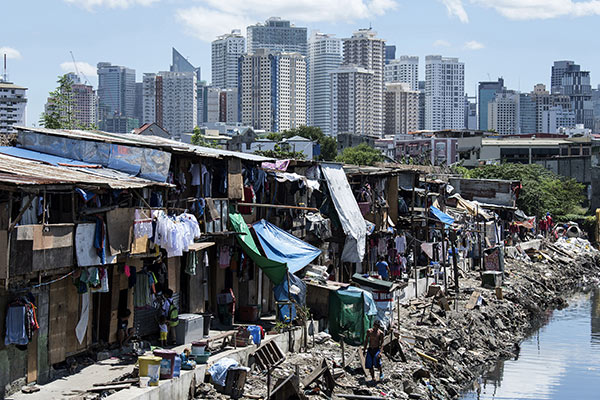
THE THIRD ONE IS Urban Poverty Limited access to health and education
Inadequate housing and services. Violent and unhealthy environment because of overcrowding. Little or no social protection mechanism.
Urban environmental problems are often blamed on poverty. Almost as often, urban affluence is viewed as an environmental burden. Meanwhile, middle-income cities are often cited as extreme examples of urban environmental distress. A stylised account of an urban environmental transition that can help explain these superficially contradictory claims in terms of the different environmental burdens typically associated with cities at different levels of affluence.

 Poverty